Environment Benefits
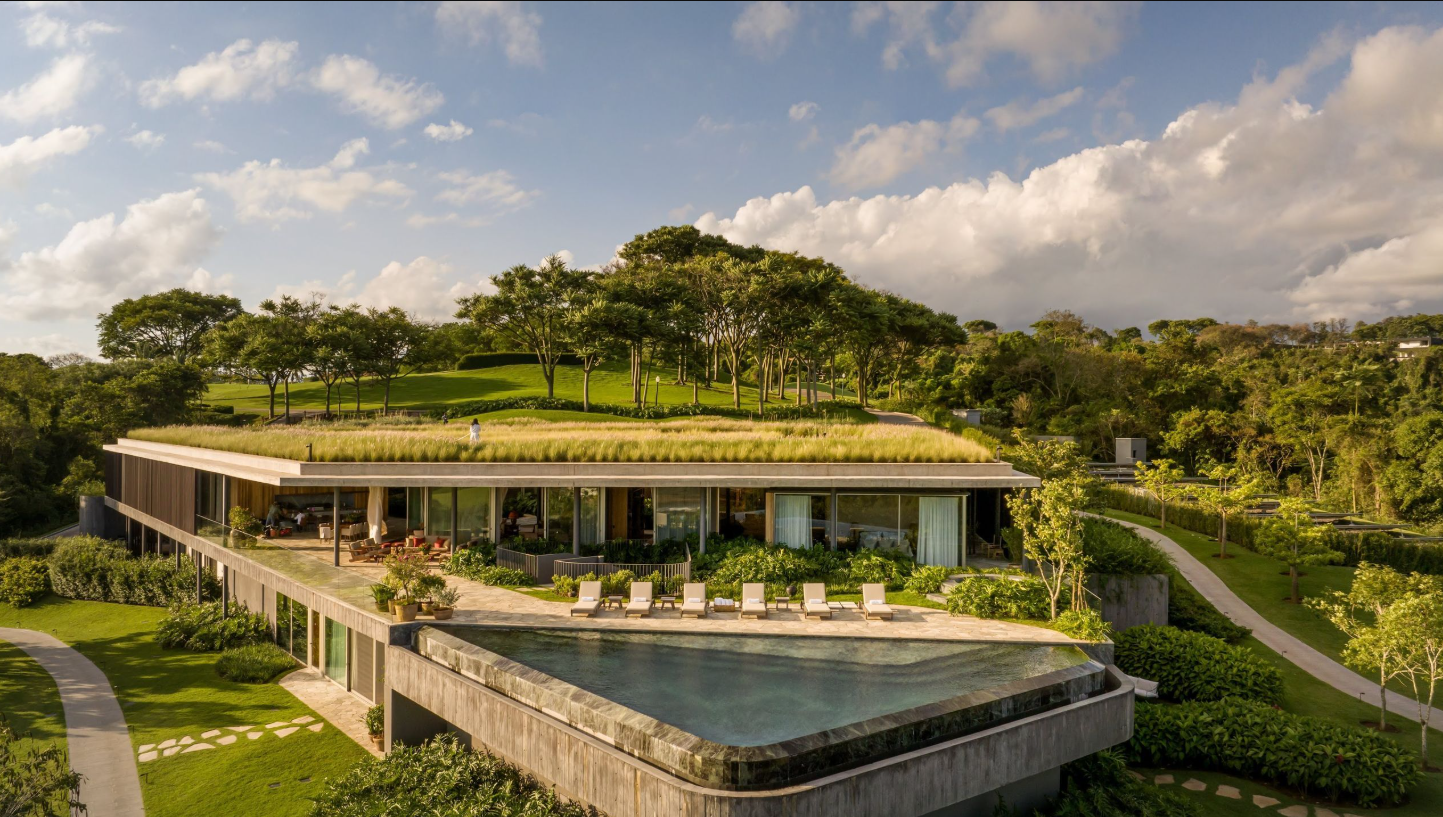
Urban Heat Island Effect
The Urban Heat Island (UHI) is the overheating of urban and suburban areas compared to the surrounding countryside, due to increased paved, built-over, and hard surface areas. Plants intercept the solar radiation that strikes roofs and eliminate it through evapo-transpiration. The wide implementation of green roofs would contribute significantly towards reducing the UHI effects.
Storm Water Retention
City roofs often play a big role in the storm water run-off problem, as it puts pressure on city sewer and drainage system. Green roofs can be considered beneficial for its storm water retention capability. During rain, plants capture rainwater and hold it within its growing media which is then released back to the atmosphere through evaporation and evapo-transpiration. This process can decrease the amount of water run-off into local water systems, delay the storm water run-off and reduces peak rates and volumes, therefore relieving overloaded drainage systems. Storm water retention rates are determined by saturated infiltration capacity, thickness of the plantation, field capacity, porosity, under-drainage layer water retention and flow, and relief drain spacing. A heavily vegetated green roof with a 20-40 cm thick growing medium can hold 10-15 cm of water.
Air Purification
Green roofs can also reduce pollution by filtering out dust particulates and other pollutants as the air passes over the plants. These particulates tend to get trapped in the surface area of the greenery. Then rain washes them all into the growing medium below. Plants also absorb gaseous pollutants through photosynthesis and helps in remitting new oxygen.
Green Roofs Manual
Dubai Municipality has issued a manual on green roofs plantation, which contains instructions for the process of planning, implementation and maintenance of green roofs and facades. To obtain a copy of the manual, please visit Dubai Municipality website. www.dm.gov.ae